
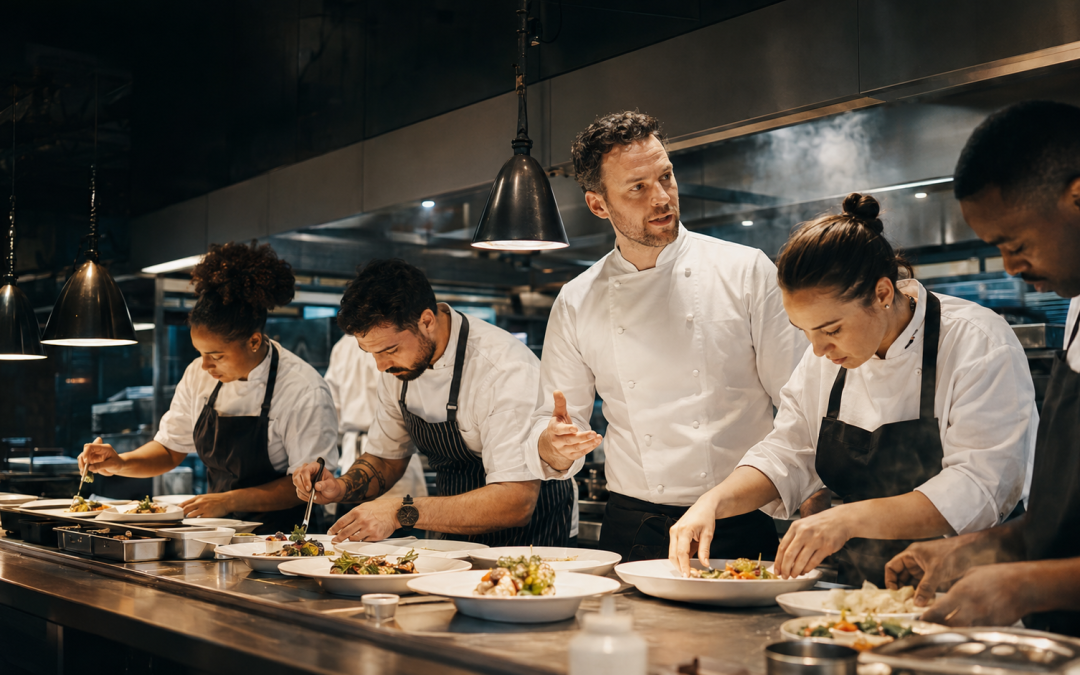
Britain’s hospitality industry is heating up again.
A packed calendar of sporting events, concerts, festivals, weddings and private celebrations has helped create a fresh summer recruitment boom. Recent reports show that hospitality and tourism job adverts have risen compared with last summer as businesses prepare for busier venues and larger crowds.
That is excellent news for chefs looking for work. However, it also creates a serious challenge for restaurants, hotels, pubs, stadiums, schools, care homes, event caterers and hospitality operators trying to find reliable chefs at short notice.
The question is no longer simply:
“Can this person cook?”
The better question is:
“Can this chef walk into a busy kitchen, communicate properly, support the team and deliver consistently under pressure?”
At Chef Zone, we believe technical ability gets a chef through the kitchen door. Soft skills determine how far they go once they are inside.
Why Chef Staffing Is Back in the Spotlight
The UK hospitality industry continues to face an unusual staffing contradiction.
Overall job vacancies have reduced in parts of the economy, but experienced chefs remain difficult to find. UKHospitality has previously reported shortages ranging from 10% for head chefs to 21% for production chefs.
At the same time, the summer of 2026 has brought growing demand from sport, music, tourism and outdoor events. According to a recent report on the UK’s summer employment market, hospitality and tourism businesses have experienced a noticeable rise in seasonal recruitment.
This means hospitality employers need to move quickly when the right people become available.
It also means chefs have more opportunities to build experience across:
- Restaurants and gastro pubs
- Hotels and private members’ clubs
- Stadiums and major events
- Schools and contract catering
- Care homes and healthcare kitchens
- Weddings and private dining
- Festivals and outdoor catering
- Temporary and emergency chef cover
Chef Zone supplies temporary chefs, permanent chefs and emergency hospitality staff throughout London, Liverpool, Manchester, Brighton, Bristol, Dorset, Devon and nationwide.
If you need to hire a temporary chef or advertise a hospitality vacancy, our team can help.
Is Working in Hospitality a Good Career?
Hospitality can offer an exciting, rewarding and genuinely life-changing career. It can also be demanding, physical and unforgiving.
Let’s tell it straight. A professional kitchen is not always the glamorous world shown on television. There are early mornings, late finishes, demanding customers and services where every ticket seems to arrive at once.
However, for the right person, few careers offer the same combination of creativity, progression, teamwork and variety.
The Advantages of Working as a Chef
1. Your Skills Can Take You Anywhere
A talented chef can work almost anywhere in the world.
Hotels, restaurants, cruise ships, private households, stadiums, schools, care homes, resorts and event companies all need trained kitchen professionals.
The fundamentals of food preparation, organisation, hygiene and teamwork travel extremely well.
2. There Is a Clear Career Ladder
A typical kitchen career can progress through roles such as:
- Kitchen Porter
- Commis Chef
- Chef de Partie
- Junior Sous Chef
- Sous Chef
- Head Chef
- Executive Chef
- Development Chef
- Group Executive Chef
- Culinary Director
The National Careers Service chef profile identifies several routes into the profession, including college courses, apprenticeships and working towards the role within a kitchen.
You do not need to become Gordon Ramsay overnight. Nobody does, including Gordon Ramsay.
You need to learn consistently, listen carefully and become slightly better after every service.
3. No Two Days Are Exactly the Same
Menus change. Seasons change. Customers change. Venues change.
Temporary chef work provides even more variety, allowing chefs to experience different kitchens, cuisines, brigades and operating styles.
This can build confidence and commercial awareness much faster than remaining in one comfortable role for years.
Chefs looking for flexible opportunities can register for chef jobs with Chef Zone.
4. Hospitality Builds Serious Life Skills
Professional kitchens teach people how to:
- Work under pressure
- Manage their time
- Communicate clearly
- Solve problems quickly
- Accept feedback
- Lead a team
- Maintain high standards
- Recover after mistakes
Those skills remain valuable far beyond the kitchen.
5. You Can See the Results of Your Work
There is something deeply satisfying about turning raw ingredients into a dish that makes somebody’s evening.
Chefs create experiences, not just meals.
A brilliant dish can become part of a wedding, birthday, business event, family celebration or once-in-a-lifetime trip. That is a privilege many professions never get to experience.
The Disadvantages of Working in Hospitality
A credible hospitality recruitment agency should not pretend the industry is perfect.
1. The Hours Can Be Unsociable
Chefs often work when everybody else is relaxing.
Evenings, weekends, Christmas, Easter and bank holidays can be some of the busiest periods. This can affect family life and social plans.
Flexible temporary chef jobs can help some professionals regain control of their working patterns, but reliability remains essential. Once a shift is accepted, the kitchen is depending on that chef.
2. Kitchen Work Is Physically Demanding
Chefs spend long periods standing, lifting, carrying and working in hot environments.
Good footwear, hydration, safe working practices and proper rest matter. Burning out is not a badge of honour.
3. Pressure Can Expose Poor Team Cultures
A busy service requires urgency, but urgency does not excuse bullying, humiliation or unsafe behaviour.
The best modern kitchens are disciplined without being destructive. Strong head chefs set clear expectations, correct mistakes and protect standards while treating people professionally.
4. Starting Salaries Can Be Modest
Earnings vary by location, experience, sector and responsibility. Specialist chefs, relief chefs and senior kitchen leaders can command stronger rates, but progression requires commitment.
Chefs who develop leadership, allergen knowledge, menu costing, stock control and team-management skills become more valuable to employers.
5. Mistakes Have Immediate Consequences
A late plate can affect an entire table. Poor allergen communication can be extremely serious. Weak stock control damages profit, while bad hygiene can damage customers and the business.
Professional cooking requires attention even when the kitchen is under pressure.
The 10 Soft Skills Every Great Chef Needs
Knife skills can be taught. Recipes can be learned. Equipment can be mastered.
These ten qualities are what separate an acceptable chef from a truly valuable one.
1. Communication
A professional kitchen depends on short, clear and accurate communication.
Chefs need to communicate with colleagues, front-of-house teams, managers, suppliers and sometimes customers. This becomes even more important during a busy service or when dealing with allergens.
The official Skills England commis chef standard specifically includes professional communication and conduct as important areas of competence.
2. Teamwork
The brigade succeeds or fails together.
A great chef notices when another section is struggling and helps without waiting to be begged. They respect kitchen porters, communicate with waiting staff and understand that every role contributes to the customer’s experience.
Talent without teamwork quickly becomes a liability.
3. Remaining Calm Under Pressure
The printer is firing. A delivery is late. Someone has called in sick. Table twelve has reported an allergy that was not mentioned on the booking.
This is where composure matters.
The best chefs slow their thinking down when the kitchen speeds up. They prioritise, communicate and solve the problem in front of them.
4. Reliability
For a hospitality employer, reliability is one of the most valuable chef skills of all.
Turning up on time, wearing the correct uniform, completing preparation and following through on commitments may sound basic. Unfortunately, dependable professionals remain harder to find than they should be.
A brilliant chef who regularly cancels is less valuable than a very good chef the team can trust.
5. Adaptability
Temporary and relief chefs may enter unfamiliar kitchens with different equipment, menus, systems and personalities.
The strongest temporary chefs observe first, ask intelligent questions and adapt quickly. They do not arrive announcing that every previous kitchen did things better.
6. Emotional Intelligence
Great kitchen leaders understand people.
They recognise when a colleague needs encouragement, when a problem requires firmness and when somebody simply needs clear instructions.
Emotional intelligence does not mean lowering standards. It means understanding how to get the best performance from different people.
7. Attention to Detail
Consistency is built through details:
- Correct portion sizes
- Accurate labelling
- Clean presentation
- Proper temperatures
- Allergen controls
- Stock rotation
- Thorough handovers
- A clean and organised section
Guests may never see the work behind the scenes, but they experience the result.
8. Time Management
Mise en place is really time management wearing an apron.
Great chefs work backwards from service. They prioritise jobs, identify possible delays and use quieter periods wisely.
Being busy is not the same as being organised.
9. Coachability
The fastest way to stop developing is to believe there is nothing left to learn.
The best chefs remain curious. They can accept feedback without treating it as a personal attack. They learn from senior chefs, junior colleagues, different cuisines and every kitchen they enter.
Ambition is useful. Ego is expensive.
10. Leadership
Leadership is not shouting the loudest.
A strong head chef creates standards that the team understands and can repeat. They organise preparation, develop junior chefs, manage costs, reduce waste and remain accountable when things go wrong.
Gordon Ramsay built his reputation through technical excellence, relentless standards, commercial awareness and the ability to develop successful kitchen teams. Television may focus on the fireworks, but sustainable success requires far more than volume.
Are Soft Skills More Important Than Cooking Ability?
A chef needs both.
Technical skill without communication can damage a service. Personality without professional competence cannot deliver the food.
The strongest hospitality professionals combine:
- Culinary knowledge
- Food safety
- Allergen awareness
- Organisation
- Commercial understanding
- Communication
- Reliability
- Teamwork
- Leadership
Employers should assess the whole person, not simply the list of restaurants on a CV.
A chef may have worked somewhere prestigious but still be unsuitable for a particular kitchen. Another candidate may have less glamorous experience but possess the attitude, stability and leadership needed to transform the team.
That is where specialist chef recruitment becomes valuable.
How Chef Zone Supports Hospitality Businesses
Chef Zone helps hospitality businesses find dependable people for temporary, permanent and emergency staffing requirements.
Our network covers chefs and hospitality professionals at multiple levels, including:
- Head Chefs
- Sous Chefs
- Chefs de Partie
- Commis Chefs
- Pastry Chefs
- Production Chefs
- School Chefs
- Care Home Chefs
- Event Chefs
- Kitchen Porters
- Front-of-House Staff
- Hospitality Managers
Whether you need last-minute chef cover, additional staff for a major event or support recruiting your next permanent head chef, contact Chef Zone.
Need a Chef? Chef Zone Has You Covered
A busy service will not wait for a recruitment strategy meeting.
If your chef has called in sick, your bookings have suddenly increased or an important event is approaching, speak to Chef Zone about temporary chef cover and hospitality recruitment across the UK.
Email: info@chefzone.co.uk
Telephone: 0800 048 7335
Website: www.chefzone.co.uk
Post a vacancy: Hire hospitality staff
Looking for work: Register with Chef Zone
Frequently Asked Questions
Where can I hire a temporary chef in the UK?
Chef Zone supplies temporary chefs, permanent chefs and emergency hospitality cover across London, Liverpool, Manchester, Brighton, Bristol, Dorset, Devon and other UK locations. Employers can submit their staffing requirements through the Chef Zone website.
Can I hire a chef for emergency cover?
Yes. Chef Zone supports businesses requiring emergency chef cover because of sickness, holidays, increased bookings, events or unexpected staffing shortages.
What types of chefs can Chef Zone supply?
Chef Zone recruits head chefs, sous chefs, chefs de partie, commis chefs, pastry chefs, production chefs, school chefs, care-home chefs and event chefs, alongside kitchen and front-of-house professionals.
What soft skills should employers look for when hiring a chef?
The most valuable chef soft skills include communication, reliability, teamwork, adaptability, time management, attention to detail, emotional intelligence, leadership and the ability to remain calm under pressure.
How can I find temporary chef jobs?
Chefs can register through the Chef Zone website and provide their experience, availability and preferred locations. Opportunities can include hotels, restaurants, pubs, events, schools, care homes and contract-catering venues.
Does Chef Zone recruit nationwide?
Yes. Chef Zone provides hospitality recruitment and chef staffing support in several major UK regions and for suitable requirements nationwide.